

WELCOME TO THE STUDIO
Learn to Shape Clay on the Wheel
Our wheel-throwing classes in Seattle are the perfect place to start. Wheel throwing is the art of shaping clay on a spinning wheel, and it's an experience open to everyone, regardless of skill level. Most of our students begin with zero experience. In our small, personalized wheel throwing classes (max 5 students), your instructor works with you directly to help you learn the fundamentals and bring your ideas to life.
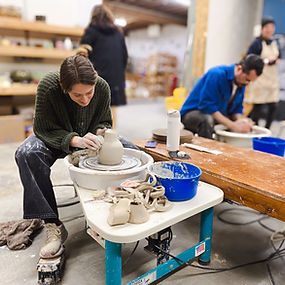
THE BASICS
What Is Wheel Throwing?
At its core, wheel throwing involves shaping a spinning ball of clay on an electric wheel using water and your hands. The basic steps you'll learn are centering the clay, opening the form, pulling up the walls, shaping your piece, and then preparing it for the final stages of drying, trimming, glazing, and firing. In our classes, students commonly create functional art like mugs, bowls, cups, and small vases.

ALL ARE WELCOME
Who Is This Class For?
It works for two kinds of students: total beginners who have never touched clay, and experienced potters who want to keep refining their craft. Whether you saw pottery online and thought, "I want to try that," or you've been throwing for years and want consistent studio time with real feedback, this class meets you where you are. You don't need to be "artistic" to start, and you won't outgrow it as you get better.
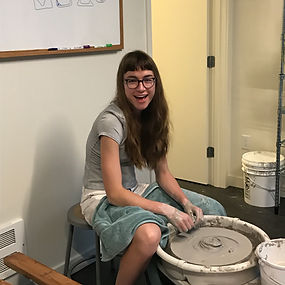
YOUR FIRST SESSION
What to Expect in a Wheel Throwing Class
A typical session involves learning to wedge clay, practicing centering clay on the wheel, pulling up walls to create a cylinder, and shaping your piece. To make the class even more tailored to you, you can submit a topic request when you book so the instructor can prepare. All of our instructors are skilled in a wide range of techniques and talents. The Clay Corner offers multiple classes per week, so you can work on multiple projects at different stages at the same time. After you build a piece, it dries in the studio, gets bisque-fired, and you come back to glaze it before the final firing.
All Levels in One Class - Here's How That Works
Our classes welcome all skill levels in the same session, and it works because every student receives individual focus.
Beginner
You'll focus on the fundamentals like centering clay, throwing a cylinder, and making your first simple forms.
Intermediate
You'll work on creating consistent sets, throwing mugs with handles, and making simple lidded jars.
Advanced
You'll refine your technique, explore complex forms, and pursue personal projects with expert guidance.